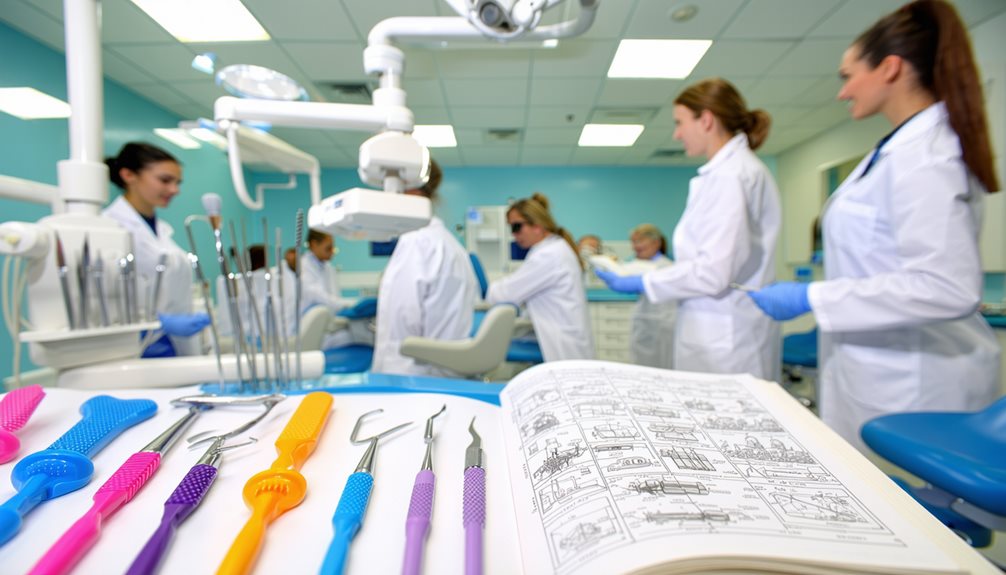
To excel in specialized dental hygiene education, prioritize enrolling in accredited programs with high educational standards. Leverage foundational courses in biology and chemistry to advance your knowledge. Select specializations that enhance career prospects and engage in hands-on training through clinical rotations or interactive simulations to bridge theory with practice. Network strategically by attending dental conferences and joining professional associations. Utilize advanced resources like online platforms for continuous learning and keep abreast of emerging technologies. Prepare for necessary certification exams and cultivate mentorship opportunities. By aligning these strategies, you position yourself advantageously in the evolving field of dental hygiene.
Understand Program Requirements
When starting on a journey towards a career in dental hygiene, it is imperative for prospective students to thoroughly understand the specific requirements of their chosen program. As the field of dental hygiene evolves with technological advancements and innovative practices, it is essential for students to be well-informed about program prerequisites and admission criteria to strategically position themselves for success.
The program prerequisites often include foundational courses in biology, chemistry, and anatomy, designed to equip students with the essential knowledge required for advanced dental hygiene studies. Additionally, familiarity with state-of-the-art dental technologies and software may be a prerequisite, reflecting the profession’s commitment to integrating innovation into everyday practice.
Admission criteria for dental hygiene programs typically extend beyond academic performance. Prospective students are encouraged to demonstrate competencies in communication and critical thinking, which are pivotal in patient interaction and care.
Volunteer experience in dental settings or related healthcare environments can greatly enhance an application, showcasing a candidate’s dedication and practical understanding of the field.
Understanding these elements not only prepares students for the rigors of the curriculum but also aligns their educational pursuits with the dynamic demands of the dental hygiene profession.
Choose Accredited Institutions
Having a solid understanding of program requirements sets the foundation for selecting the right educational path in dental hygiene. One of the most important steps in this journey is choosing an accredited institution.
Accreditation significance cannot be overstated, as it guarantees the program meets high educational standards and equips students with the fundamental skills for a dynamic career in dental hygiene. Accredited programs are reviewed regularly, assuring that the curriculum is up-to-date with the latest advancements in the field.
The institutional reputation also plays an essential role in this decision. A well-regarded institution often provides access to advanced facilities, experienced faculty, and a robust network of industry connections.
These elements are critical for students who wish to remain at the forefront of dental hygiene innovations. In addition, graduating from an accredited institution with a strong reputation can greatly enhance employment prospects, as employers frequently seek candidates from distinguished programs.
Explore Course Specializations
When considering dental hygiene education, it is essential to explore course specializations that offer a diverse curriculum, which can greatly enhance your expertise in specific areas such as periodontics or pediatric care.
Engaging in programs that provide hands-on learning opportunities guarantees that you gain practical experience alongside theoretical knowledge, thereby preparing you for the dynamic nature of dental practice.
Specializing can also facilitate career advancement, as it equips you with unique skills that are highly valued in the healthcare industry, opening doors to specialized roles and increased professional recognition.
Diverse Curriculum Options
In the domain of dental hygiene education, the availability of diverse curriculum options plays a vital role in shaping competent professionals well-versed in specialized areas of the field. To meet the evolving demands of modern healthcare, educational programs must encompass a wide array of subjects that encourage interdisciplinary collaboration.
By integrating disciplines such as oral pathology, periodontics, and public health, students gain a thorough understanding of complex dental issues and are better equipped to address them innovatively.
Incorporating digital tools within the curriculum is equally essential. Technological advancements, like digital radiography and oral health software, are revolutionizing dental practices. By familiarizing students with these tools, educational institutions prepare them to seamlessly shift into contemporary dental environments.
Furthermore, the inclusion of digital simulations and online learning modules fosters a flexible learning environment, allowing students to engage with content at their own pace.
Ultimately, the breadth of curriculum options not only enhances the depth of knowledge but also cultivates critical thinking and problem-solving skills.
Encouraging students to explore diverse specializations not only broadens their expertise but also empowers them to become leaders in advancing dental hygiene practices, ultimately improving patient outcomes and community health.
Hands-On Learning Opportunities
Immersive hands-on learning opportunities are vital for dental hygiene students to develop practical skills and gain real-world experience. By engaging in practical techniques, students can bridge the gap between theoretical knowledge and practical application, a key step in becoming proficient professionals.
Specialized dental hygiene programs often incorporate state-of-the-art interactive simulations, which serve as a compelling platform for students to refine their skills. These simulations mimic real-life scenarios, allowing learners to practice and perfect their techniques in a controlled environment that encourages experimentation and learning from mistakes without the risk of patient harm.
Moreover, clinical rotations and internships in dental offices or community health settings provide invaluable experiences that reinforce classroom learning. Students can observe seasoned dental hygienists, gaining insights into patient interaction, efficient workflow management, and the application of advanced dental technologies.
This direct exposure to the professional setting not only enhances technical abilities but also fosters critical thinking and problem-solving skills.
Innovative programs that emphasize hands-on learning guarantee that graduates are well-equipped to meet the dynamic demands of modern dental practices. By prioritizing these immersive experiences, educational institutions prepare future dental hygienists to excel and adapt in their careers, thereby contributing positively to the field of oral health.
Career Advancement Benefits
Specialization courses offer notable career advancement benefits for dental hygiene professionals seeking to elevate their expertise and marketability. By investing in specialized education, dental hygienists can enhance their skill set, making them more competitive and opening doors to diverse career growth opportunities.
Specialized courses in areas such as periodontics, orthodontics, or pediatric dentistry equip professionals with advanced knowledge, allowing them to perform specialized procedures and provide thorough care.
The demand for specialized skills in the dental industry is increasing, and pursuing these courses can considerably increase a professional’s value in the job market. Employers often seek candidates who possess unique capabilities, which can lead to higher earning potential and more influential positions within dental practices or educational institutions.
In addition, skill enhancement through specialization fosters professional satisfaction, as practitioners are better equipped to address complex patient needs.
Engaging in specialized education also facilitates networking with other professionals in the field, fostering collaborative opportunities and knowledge exchange. This not only builds a robust professional network but also sustains long-term career growth.
Utilize Advanced Learning Resources
Leveraging advanced learning resources is essential for dental hygiene students aiming to excel in their education and future careers. Embracing online learning platforms can greatly enhance understanding and retention of complex dental hygiene concepts. These platforms offer a plethora of interactive resources, including virtual simulations and digital textbooks, that cater to various learning styles.
By engaging with these tools, students can visualize anatomical structures, practice procedural techniques, and receive instant feedback, which facilitates a deeper comprehension of the subject matter.
Incorporating cutting-edge technology into your educational journey not only broadens your knowledge base but also keeps you abreast of the latest developments in dental hygiene. Online forums and webinars provide opportunities to connect with experts and peers globally, fostering a community of shared knowledge and innovation.
Additionally, utilizing mobile applications designed for dental learning can offer on-the-go access to quizzes, flashcards, and case studies, enabling consistent learning outside the traditional classroom environment.
Engage in Hands-On Training
Why is hands-on training so vital for aspiring dental hygienists? The answer lies in the development of practical skills and the acquisition of invaluable clinical experience. Engaging in hands-on training allows students to move beyond theoretical knowledge, delving into real-world application that is essential for competence in dental hygiene.
This immersive learning method enables students to understand the nuances of patient care, infection control, and the effective use of dental instruments, which are critical in a dental hygienist’s daily responsibilities.
Practical skills honed through hands-on training give students the confidence to perform preventive and therapeutic procedures with precision. By practicing these skills in a controlled environment, students can make mistakes and learn from them without the pressures of a real clinic, fostering a safe space for growth and innovation.
Additionally, hands-on training prepares students to adapt to various clinical scenarios, enhancing their problem-solving abilities and clinical judgment.
Clinical experience gained through this approach also bridges the gap between academic knowledge and its practical application. It guarantees that students are not only well-versed in dental theories but also adept at translating them into effective patient care, thereby equipping them to thrive in a dynamic healthcare environment.
Network With Industry Professionals
To effectively advance in dental hygiene education, it is essential to network with industry professionals through various channels.
Attending dental conferences offers valuable opportunities to learn from experts and engage in discussions about the latest trends and techniques.
Additionally, joining professional associations and utilizing social media platforms can facilitate connections with mentors and peers, fostering a supportive community that enhances both personal and professional growth.
Attend Dental Conferences
Attending dental conferences is an invaluable opportunity for dental professionals to expand their knowledge base and engage with the latest advancements in the field.
These events provide a platform for exploring cutting-edge dental technology and industry innovations that are shaping future career paths. By participating, professionals can enhance patient communication, promote public health, and pursue continuing education that aligns with ethical practices.
Here are three compelling reasons to attend dental conferences:
-
Access to Research Opportunities**: Conferences are a hub for discovering novel research initiatives that can drive evidence-based practice**. Engaging with researchers opens doors to collaborative studies and interdisciplinary collaboration, enriching your professional portfolio.
-
Global Perspectives and Networking: Interacting with international experts offers a broader understanding of global perspectives in dental hygiene. Networking with peers from diverse backgrounds can lead to innovative approaches in tackling public health challenges and improving patient outcomes.
-
Professional Development and Innovation: Attendees can participate in workshops and seminars focused on new technologies and treatment methodologies. This exposure is essential for staying at the forefront of industry trends and continuously evolving in your practice.
Join Professional Associations
Joining professional associations serves as a cornerstone for career advancement and knowledge acquisition in dental hygiene. These associations provide a structured platform for dental hygienists to engage with peers, access cutting-edge research, and participate in ongoing professional development. Membership benefits often include access to exclusive educational resources, webinars, and industry publications that keep members informed about the latest innovations and best practices in dental care.
Being part of a professional association also opens doors to networking opportunities that are invaluable for career progression. Engaging with industry professionals through these associations fosters collaboration, encourages the exchange of ideas, and facilitates mentoring relationships. This network can be particularly beneficial for those seeking specialized roles or looking to shift into leadership positions within the field.
Moreover, professional associations often offer certification programs and continuing education courses that are essential for maintaining licensure and enhancing one’s expertise. These programs are designed to equip members with advanced skills and knowledge, ensuring they remain competitive in a rapidly evolving industry.
Connect via Social Media
In addition to leveraging professional associations, dental hygienists can enhance their professional presence and expand their networks by actively engaging on social media platforms.
These platforms offer dynamic opportunities to connect with industry professionals, share knowledge, and stay updated with the latest advancements in dental hygiene. To maximize the potential of social media, consider the following strategies:
-
Join Relevant Online Communities****: Engage in groups and forums dedicated to dental hygiene on platforms like LinkedIn and Facebook. These online communities are valuable resources for sharing experiences, discussing challenges, and seeking advice from seasoned professionals.
-
Follow and Interact with Industry Leaders**: Identify and follow thought leaders in dental hygiene and related fields. By engaging with their content through comments and shares, you can gain insights into emerging trends** and best practices while making your presence known in the professional community.
-
Share Your Expertise and Experiences: Regularly post informative content, such as articles, case studies, or personal experiences on platforms like Instagram and Twitter. This not only showcases your expertise but also fosters discussions and invites collaboration from peers.
Embrace these innovative strategies to build a robust professional network, enhancing your career prospects and contributing to your continuous learning journey.
Stay Updated With Trends
Remaining informed about the latest trends in dental hygiene is essential for professionals committed to providing the highest standard of care. The dynamic nature of dental health necessitates a proactive approach to learning and adaptation.
By regularly engaging with industry publications, dental hygienists can gain insights into the latest innovations that are transforming the field. Journals such as the Journal of Dental Hygiene and Clinical Advances in Periodontics offer valuable research findings and expert opinions on emerging technologies and methodologies.
In addition to periodicals, subscribing to newsletters from reputable dental organizations can provide timely updates on breakthroughs and evolving practices. These resources often highlight innovative tools and techniques, such as advancements in ultrasonic scaling or the integration of digital imaging technologies, which can greatly enhance patient outcomes.
Furthermore, online platforms and webinars hosted by leading dental associations allow professionals to explore deeper into specific areas of interest, facilitating continuous education and skill refinement.
Engaging with these resources not only fosters a culture of lifelong learning but also positions dental hygienists at the forefront of their profession. By staying abreast of current trends, professionals are better equipped to implement evidence-based practices, thereby elevating the quality of care they provide.
Participate in Workshops
Engaging in workshops provides invaluable hands-on learning experiences that are essential for mastering practical dental hygiene skills.
These interactive sessions not only enhance your technical abilities but also offer opportunities to network with seasoned professionals in the field.
Hands-On Learning Benefits
While theoretical knowledge forms the foundation of dental hygiene education, the integration of hands-on learning through workshops is invaluable. Experiential learning bridges the gap between theory and practice, allowing students to grasp complex concepts through practical applications.
Workshops offer a dynamic environment where participants can engage actively with the material, fostering a deeper understanding and retention of information.
Benefits of Hands-On Learning in Dental Hygiene:
-
Practical Applications: Hands-on workshops provide students with the opportunity to apply theoretical knowledge in real-world scenarios. This practical application enhances skills such as instrumentation techniques, infection control practices, and patient communication, which are essential for professional success.
-
Increased Confidence: Experiential learning builds confidence as students tackle real-life challenges under expert guidance. By repeatedly practicing procedures, students gain proficiency and assurance in their abilities, preparing them for future clinical settings.
-
Skill Enhancement: Workshops often introduce cutting-edge tools and techniques, fostering an innovative mindset. Exposure to the latest advancements in dental hygiene encourages students to think critically and adapt to evolving industry standards, ultimately enhancing their skill set and employability.
Networking With Professionals
Participating in workshops not only enhances practical skills but also offers invaluable networking opportunities with seasoned professionals in the field of dental hygiene. Engaging in these educational forums allows budding hygienists to connect with experts who can provide insights beyond textbook knowledge.
Workshops often emphasize interactive learning through collaborative projects, fostering an environment where participants can work closely with industry leaders. This interaction not only enriches one’s technical prowess but also opens the door to professional friendships that may lead to mentorship or future career opportunities.
To maximize the benefits of workshops, participants should approach each session with a strategic mindset. Prioritize engaging with presenters and peers alike, as these interactions can lead to the exchange of innovative ideas and the formation of alliances that extend beyond the workshop itself.
Documenting contacts and following up with meaningful communication can solidify these connections, paving the way for collaborative endeavors in the future.
Furthermore, workshops serve as a platform for introducing and discussing emerging trends and technologies in dental hygiene. By staying informed and connected, participants are better positioned to implement cutting-edge practices in their own professional settings, ultimately advancing their careers and contributing to the evolution of the field.
Prepare for Certification Exams
Preparing for certification exams in dental hygiene requires a strategic approach to secure success. Embracing innovative study methods is vital for keeping up with the evolving landscape of dental hygiene education. The following are key strategies to enhance your preparation:
-
Mock Exams: Regularly taking mock exams simulates the actual testing environment, allowing you to familiarize yourself with the format and types of questions you’ll encounter. This practice not only boosts confidence but also highlights areas needing further review.
-
Study Groups: Joining a study group can offer diverse perspectives and collaborative learning opportunities. Engaging with peers allows for the exchange of knowledge, tips, and resources, fostering a deeper understanding of complex topics.
Study groups provide accountability, making sure you stay on track with your study schedule.
- Test Taking Strategies and Time Management**: Developing effective test taking strategies** is essential for optimizing performance. Focus on techniques such as process of elimination, time allocation per question, and prioritizing sections based on your strengths.
Cultivating strong time management skills guarantees thorough coverage of all material without last-minute cramming.
Incorporating these strategies into your study routine will prepare you completely, positioning you to excel in your dental hygiene certification exams with confidence and competence.
Seek Mentorship Opportunities
Harnessing effective study strategies is just one component of a thorough approach to mastering dental hygiene certification exams. Equally crucial is seeking mentorship opportunities, which can greatly enhance your educational journey. Engaging in mentorship programs allows aspiring dental hygienists to gain insights from seasoned professionals who can provide guidance, share experiences, and offer personalized advice tailored to individual career paths.
These programs often facilitate a deeper understanding of the practical nuances in dental hygiene that textbooks may not fully capture.
Participating in networking events is another strategic move. These gatherings serve as fertile ground for forming meaningful connections within the dental community. By attending such events, students and new professionals can meet potential mentors, establish relationships with industry leaders, and stay abreast of emerging trends and innovations in dental hygiene.
These interactions can open doors to opportunities for professional growth, such as internships, job placements, or further educational pursuits.
For those seeking to excel in specialized dental hygiene, leveraging mentorship programs and networking events is indispensable. These platforms not only enhance learning but also cultivate a professional network that supports continuous development and adaptability in a rapidly evolving field.
Frequently Asked Questions
What Is the Average Cost of Specialized Dental Hygiene Programs?
The average program costs for specialized dental hygiene education range from $15,000 to $40,000. Prospective students should explore available financial aid options, including scholarships and grants, to mitigate expenses while pursuing innovative and advanced training in this field.
How Can I Balance Work and Study Effectively During the Program?
Balancing work and study requires efficient time management and innovative study techniques. Prioritize tasks, set a structured schedule, and utilize technology-driven tools to enhance productivity. Engage in active learning methods to maximize comprehension and retention during specialized dental hygiene education.
Are There Scholarships Available Specifically for Dental Hygiene Students?
Yes, scholarships specifically for dental hygiene students exist, encompassing various scholarship types such as merit-based and need-based. Funding sources include professional associations, universities, and private organizations, all fostering innovation and excellence in the dental hygiene field.
What Career Opportunities Are Available After Completing Specialized Dental Hygiene Education?
Completing specialized dental hygiene education greatly enhances career advancement prospects, enabling entry into advanced roles such as public health educator, researcher, or clinical instructor. This specialization broadens opportunities within a dynamic job market, fostering innovative contributions to oral healthcare.
How Long Does It Typically Take to Complete a Specialized Dental Hygiene Program?
The program duration for specialized dental hygiene education typically ranges from 18 months to three years, depending on degree requirements. Advanced certifications may necessitate additional coursework and clinical experience, fostering innovative skills tailored to evolving industry demands.
Conclusion
In summary, achieving excellence in specialized dental hygiene education necessitates a thorough understanding of program requirements and the selection of accredited institutions. Engaging in course specializations and utilizing advanced learning resources are essential steps. Hands-on training, staying informed about industry trends, and active participation in workshops further enhance educational outcomes. Preparation for certification exams and seeking mentorship opportunities provide vital support in the professional journey, ensuring a well-rounded and informed approach to career advancement in dental hygiene.